Science
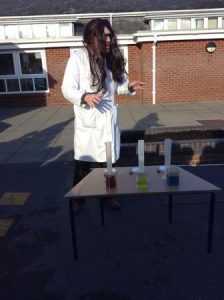
At Hill View, science is driven by awe and wonder. We provide an exciting, hands-on curriculum that inspires children to question, investigate and explore the world around them. Through practical experiences, educational visits and meaningful enrichment opportunities, children develop curiosity, resilience and a deeper understanding of the world in which they live.
We want our children to see themselves as scientists: asking questions, exploring ideas and using evidence to explain their thinking. Science helps children understand the world around them, equips them with important life skills and inspires future aspirations.
Intent
At Hill View Primary School, we intend for all children to:
- Develop a secure understanding of key concepts in biology, chemistry and physics.
- Build a strong foundation of scientific knowledge and vocabulary.
- Develop the skills of scientific enquiry through practical investigation and exploration.
- Become curious, reflective and critical thinkers who question the world around them.
- Understand the relevance of science in everyday life and appreciate its role in the wider world.
- Be prepared for future scientific learning and opportunities beyond primary school.
Our curriculum is designed to ensure that all children, regardless of background or starting point, can achieve success in science and develop a lifelong interest in the subject.
Implementation
Science is taught through a carefully sequenced curriculum that follows the National Curriculum and builds progressively from Reception to Year 6.
Children learn through discrete science lessons as well as meaningful cross-curricular opportunities where appropriate. Knowledge and skills are taught systematically, allowing children to make connections between previous and new learning.
Throughout their time at Hill View, children develop both:
Substantive Knowledge
The scientific facts, concepts and ideas within biology, chemistry and physics.
Disciplinary Knowledge
The skills required to work scientifically, including planning investigations, collecting evidence, analysing findings and drawing conclusions.
Children revisit important concepts throughout the curriculum, enabling them to deepen their understanding and retain knowledge over time.
Working Scientifically
Scientific enquiry is at the heart of our science curriculum. Children develop their investigation skills through opportunities to:
- Observe over time.
- Seek patterns.
- Identify, classify and group.
- Carry out comparative and fair tests.
- Research using secondary sources.
These enquiry skills are taught progressively and applied within a range of scientific contexts.
Early Years Foundation Stage (EYFS)
In EYFS, science is taught primarily through the Understanding the World area of learning.
Children learn through exploration, investigation, discussion and play. They are encouraged to observe changes, notice patterns, ask questions and make predictions about the world around them.
These early experiences provide the foundations for future scientific learning and support the development of curiosity, problem-solving and critical thinking skills.
Key Stage 1 and Key Stage 2
Science teaching follows the National Curriculum and enables children to develop their understanding of:
- Biology
- Chemistry
- Physics
Learning builds progressively from year to year, ensuring that children revisit and deepen prior knowledge while developing increasingly sophisticated scientific understanding.
Children are encouraged to use precise scientific vocabulary and communicate their ideas using evidence to justify their thinking.
Enrichment and Entitlement
We believe that real-world experiences are essential in developing scientific understanding. Our curriculum is enriched through a wide range of opportunities that bring science to life.
Examples include:
- Educational visits to farms, zoos, science centres and environmental learning centres.
- Opportunities to observe and care for living things, including our annual chick-hatching experience.
- Practical investigations linked to current learning.
- Workshops and visitors who share specialist scientific knowledge and expertise.
- Outdoor learning opportunities exploring habitats, seasonal change and environmental issues.
- Whole-school events, including British Science Week and other science-themed activities.
These experiences help children make meaningful connections between their classroom learning and the wider world.
Assessment
Assessment is ongoing and informs future teaching and learning.
Teachers assess children's scientific understanding through:
- Questioning and discussion.
- Observation of practical investigations.
- Written work and outcomes.
- Retrieval activities and quizzes.
- Pupil explanations and scientific reasoning.
Assessment enables teachers to identify next steps and ensure all children make progress throughout the curriculum.
Impact
The impact of our science curriculum can be seen in the knowledge, skills and enthusiasm demonstrated by our pupils.
By the time children leave Hill View, they:
- Have secure scientific knowledge across biology, chemistry and physics.
- Use scientific vocabulary accurately and confidently.
- Ask thoughtful questions and investigate independently.
- Apply scientific enquiry skills effectively.
- Communicate findings using evidence and reasoning.
- Understand the relevance of science in everyday life.
- Are well prepared for the next stage of their education.
Our children leave Hill View with curiosity, confidence and a genuine appreciation of the role science plays in understanding and improving the world around us.
Diversity, Inspiration and Future Learning
Children learn about the contributions of significant scientists from a wide range of backgrounds, cultures and time periods. Through these experiences, pupils recognise how science has shaped our world and continues to create opportunities for innovation, discovery and future careers.